
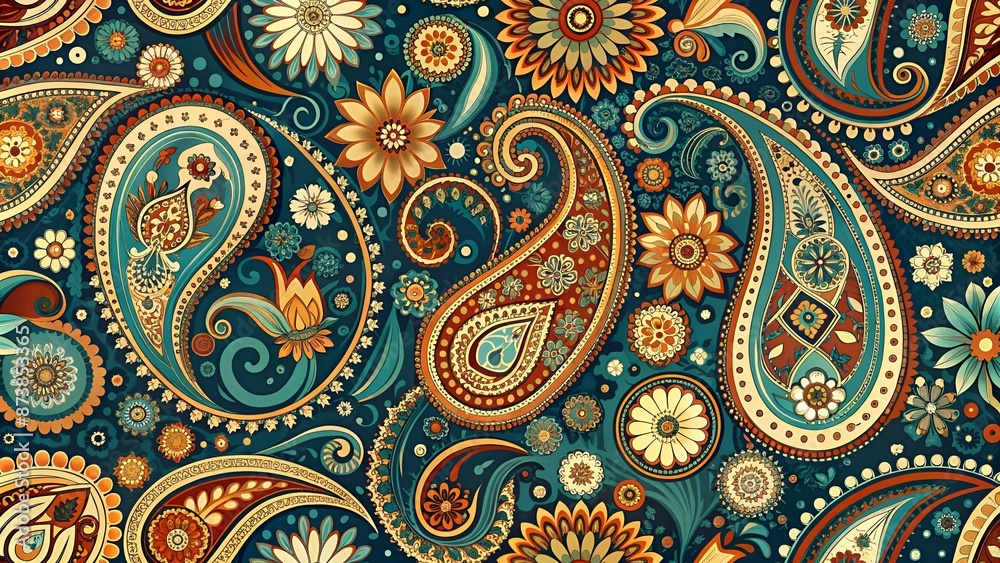
You’ve seen it on scarves, shirts, and bags—that swirling, teardrop-shaped design known as paisley. But what you may not know is that this motif has roots stretching back over 2,000 years. Originally called boteh, the paisley pattern is far more than a fashion trend—it’s a symbol of resilience, identity, and global connection.
From Persia, With Meaning
Paisley’s story begins in ancient Persia, where boteh represented the cypress tree—a symbol of life, eternity, and strength. Some legends even say the prophet Zoroaster planted the first sacred cypress, making the motif spiritually significant. Found on textiles, architecture, and religious artifacts, the boteh stood for more than beauty—it symbolized an enduring spirit.
Mughal India and the Rise of Kashmiri Shawls
As time passed, the boteh traveled east and flourished in Mughal India, especially in Kashmir. There, artisans wove it into pashmina shawls—luxurious, intricate pieces that could take years to complete. These shawls became prized across Asia and Europe, transforming boteh into something even more elaborate—blending floral forms and delicate swirls into the mango- or pine cone-like shape we know today.
How Paisley Got Its Name
In the 18th and 19th centuries, European traders brought Kashmiri shawls back home, where demand exploded. Kashmir couldn’t keep up, so textile mills in Paisley, Scotland began producing their own versions. Thanks to new machinery and local ingenuity, the town became synonymous with the design. Eventually, boteh became known globally as the “paisley pattern.”
A 1960s Comeback with a Message
In the 1960s, paisley was reborn. It became a symbol of freedom, rebellion, and peace, embraced by counterculture icons like The Beatles and Jimi Hendrix. Its fluid lines and exotic flair perfectly reflected the era’s psychedelic, anti-establishment spirit.
A Modern Classic
Today, paisley continues to evolve. It appears on runways, in streetwear, and even as tattoos—speaking to its versatility and timeless appeal. More than a design, paisley is a story told in pattern form—a story of migration, reinvention, and enduring beauty.
So the next time you wear paisley, remember: you’re not just wearing a print. You’re wearing a piece of world history.