
Introduction: The Shifting Shades of Pink
Colour meanings are rarely fixed; they evolve, shaped by cultural, historical, and economic forces. Pink exemplifies this dynamic shift. Once a symbol of masculinity, power, and youthful vigor, pink now largely associates with femininity in Western societies. This report explores the complex factors behind pink’s gender perception shift, demonstrating that color meanings are constructed, not inherent. The idea of a color having a fixed gender is a modern concept. Pink’s journey offers a compelling illustration of this fluidity, particularly regarding its historical significance as Pink for Men.
Pink’s Masculine Heritage: A Diminutive of Red
The Ancestry of Pink: Red’s Legacy
Historically, red symbolized power, vigor, and warfare. In ancient Greece and Rome, costly red dye signified wealth and authority, often worn by elites. Gifting red showed deep affection. Across cultures, red held significant weight; in China, it brings luck, fortune, and fertility, while in India, brides wear red for beauty, purity, and love.
Pink, a lighter shade of red, inherited these powerful connotations. It was seen as a “softer” or “youthful” red, embodying strength in a less aggressive form. This lineage meant pink was often described as a “more decided and stronger color,” making it suitable for boys in the early 20th century. This historical context explains why pink was initially considered masculine or gender-neutral with masculine undertones. Color symbolism can be hierarchical, with lighter shades modifying parent hues.

18th-Century Aristocracy: A Symbol of Wealth and Power
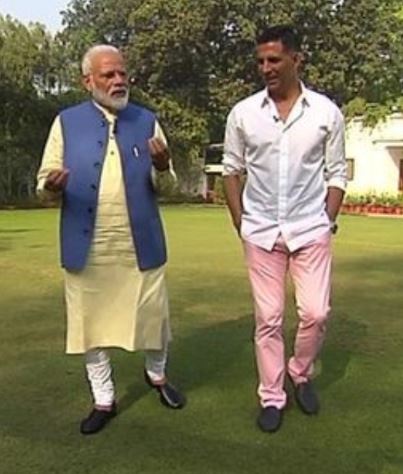
In the 18th century, pink was highly fashionable across Europe, serving as a symbol of class and luxury for both men and women. Men confidently wore pink, appearing in pink silk suits with floral embroidery, which was considered “perfectly masculine.” This choice displayed their wealth and influence. Indeed, pink was explicitly a “manly color” in the 18th century, directly linked to Mars, the Roman God of War. This era clearly showcased Pink for Men as a sign of status.
Wearing vibrant colors like pink was expensive before synthetic dyes in the 1850s. Dyes were costly and often imported, so wearing pink indicated affluence, transcending gender. The ability to afford luxurious hues, from salmon to magenta, paired with metallic accessories, underscored high status. Status, not gender, determined who wore pink. The gendering of colors coincided with wider dye availability in the mid-19th century, suggesting new social distinctions, like gender, were imposed once colors became less exclusive.

Early 20th-Century American Fashion: The Ivy League and Brooks Brothers
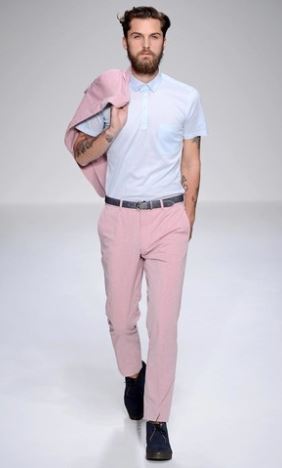
The early 1900s saw young men confidently sporting pink dress shirts. Brooks Brothers made the first such shirt, introduced in 1900, though it initially went “long unnoticed.” Its widespread popularity among men surged later. The shirt was “publicized for college girls in 1949.” By 1955, LIFE Magazine featured “The Peak Year for Pink,” highlighting pink’s widespread adoption in male clothing across the U.S. Manufacturers saturated their output with the pastel color. It was worn with charcoal gray in various items, including golf and dinner jackets. Pink became a staple, not a luxury, even acceptable for teenage boys. This suggests that while Pink for Men existed, its mainstream acceptance was significantly boosted by female fashion leadership, showing a fascinating reversal of influence before pink became predominantly feminine.

The Great Gender Reversal: Post-World War II and the Dawn of Femininity
Early 20th-Century Inconsistency and the “Pink-Blue Reversal” Debate
The early 20th century presented a complex landscape for pink’s gender associations. At the turn of the century, no widespread agreement existed on color associations for girls and boys. Children’s clothing was differentiated by cut, pockets, and decoration, not color.
When color coding emerged, it often reversed today’s norm: pink was for boys, considered “more decided and stronger, “while blue was for girls, viewed as “more delicate and dainty.” A 1927 Time Magazine survey showed 60% of stores suggesting Pink for Men (boys). Some researchers, like Marco Del Giudice, suggest “inconsistency” rather than a sharp “pink-blue reversal” before the 1940s. This conflicting evidence shows the gendering of colors was largely arbitrary, driven by later societal and commercial forces, not inherent qualities.


Post-World War War II Societal Restructuring and Advertising’s Role
The post-World War II era marked a pivotal moment for pink’s gendering. As soldiers returned, society aimed to re-establish traditional gender roles. Women were encouraged to leave the workforce and return home. Advertisers played a strategic role, marketing pastel pink appliances and upholstery specifically to women. This campaign aimed to symbolize the domestic sphere as a “self-contained pink universe of womanhood,” reinforcing the home as women’s territory. Men’s fashion shifted to simpler, neutral tones, reflecting military service.
The 1940s saw manufacturers definitively “decide that pink was for girls, and blue was for boys.” Stores began to “greatly push the narrative” of these gendered associations, which quickly became an “accepted norm” by the 1940s. This was a calculated marketing strategy, driven by economic and social imperatives, aimed at re-feminizing women and guiding them into domestic roles. This illustrates the powerful role of economic and social engineering in shaping cultural norms.
A key intent behind gender-specific baby clothes was to boost sales. The goal was to “force parents to buy new clothes for their second child if it was a boy and the first child was a girl.” This strategy was supported by the idea that “the more you individualize clothing, the more you can sell.” Affluent parents could afford an entirely new wardrobe for a child of a different gender. Gendering clothing made it “harder to pass down clothing from an older sibling to a younger one if they have mismatched gender assignments.” This economic driver is a clear example of planned obsolescence, where product design is intentionally made to become outdated, encouraging replacements.
The Role of Department Stores and the Baby Boomer Era
In the 20th century, department stores like Macy’s became instrumental, “persuading parents to buy gender specific clothing.” This was not passive; it actively shaped demand. During the Baby Boomer era (1946-1964), department stores consistently championed pink for girls and blue for boys. They “fiercely persuas[ed] parents to choose between these two options.” Baby Boomers were the “first generation who grew up dressed like their mothers and fathers in pinks and blues.” This solidified gendered norms from an early age, highlighting the power of retail and marketing in establishing societal conventions during periods of mass consumption.
Ultrasound Technology and the Reinforcement of the Binary (1980s)
Gendered baby clothes began in the 1940s. However, widespread ultrasound technology in the 1980s provided a powerful new impetus, forcefully re-entrenching this binary. Parents could learn their unborn baby’s sex, allowing them to “shop for a baby boy or girl specifically.” Industries “responded to this marketing opportunity in full force.” This technological advancement created earlier purchasing opportunities for gender-specific items, from crib sheets to strollers, further solidifying the pink/blue dichotomy in childhood consumerism. This shows how technology can create market opportunities that reinforce social norms.
Cultural Reinforcement: Icons, Media, and the Solidification of Pink’s Feminine Identity
Influence of Cultural Icons (1950s-1960s)
The mid-20th century solidified pink’s feminine association. Prominent cultural figures significantly influenced this. Many personalities had “great influence on the public awareness and use of pink in fashion and decoration.” Mamie Eisenhower, First Lady in 1953, was known for her pink preference in clothing and decor; a specific shade was named “Mamie Pink” after her. Her public image and embrace of pink “cemented the color’s association with femininity.” Other icons like Marilyn Monroe and Brigitte Bardot also contributed to pink’s feminine image. Their consistent portrayal wearing pink created a powerful visual link, accelerating pink’s adoption as a distinctly feminine hue.

Media Portrayal and the “Girlie-Girl” Culture
Since the 1950s, gendered color associations have been “increasingly applied in the marketing of products, from clothes to toys.” This intensified in the 1990s with “girlie-girl culture.” Disney animated films, starting with The Little Mermaid (1989), heavily influenced this. These films were “heavily marketed to girls, especially, and pink was everywhere in marketing campaigns.” This pervasive marketing capitalized on a “strong association between gender and certain colors: bold colors for boys, pastel colors for girls, especially pink.” A striking example: 86% of pink toys were marketed as “girls only.” Mass media and entertainment industries perpetuate gender stereotypes from a young age, shaping consumer preferences and societal expectations.
The Role of Toys and Their Developmental Impact
After World War II, toy marketing became “increasingly gendered.” A “significant increase in gender-specific marketing” occurred in the 1980s. Barbie and G.I. Joe are prime examples. 1960s advertisements reinforced these roles. Young girls were depicted with “entirely pink toy cleaning set[s]” and mini kitchens, subtly instilling the idea that a woman’s primary purpose was domestic. Dolls like “Chatty Cathy” (1959) carried underlying misogynistic connotations, implying women who spoke too much should be silenced.
Gendered toy marketing impacts beyond play. Research shows exposure to gendered toys can “limit children’s cognitive development,” reinforcing stereotypes and limiting diverse experiences. These toys also “influence children’s understanding of gender roles and expectations,” perpetuating traditional gender stereotypes. Studies on color preference show these associations are learned; girls prefer pink toys around age two, and boys develop an aversion to pink around 2.5 years old. This suggests “outside influences” like advertising, not biology, drive these preferences. Early childhood marketing profoundly impacts identity formation, perpetuating rigid gender binaries from a young age.
Beyond the Binary: Contemporary Reinterpretations and the Future of Pink
The Women’s Liberation Movement and the Unisex Counter-Trend (1960s-1970s)
The mid-1960s saw the rise of the women’s liberation movement. It introduced a “contrarian tendency to avoid gendered clothing colors for children and towards more unisex clothing.” A core belief was that “frilly, colorful clothing” for girls contributed to “subservient roles.” Feminists advocated dressing girls “more like boys and less like frilly little girls,” aiming to provide “more options and feel freer to be active.” This philosophical shift impacted fashion, leading to a decline in gender-specific clothing. The Sears, Roebuck & Company catalog, for two years in the 1970s, featured “zero pink toddler clothing.” This period shows how social activism can challenge consumer norms, pushing for a more gender-neutral approach to children’s wear.
The Reclamation of Pink by Social Movements
Pink’s journey includes powerful acts of re-appropriation. The “pink triangle,” used by Nazis to identify homosexual men, was “reclaimed by gay rights activists” in the 1970s, becoming a symbol of pride and resistance. While this occurred after pink became feminine, it’s suggested this re-emergence in a male persecution context might have “made the color more taboo for men,” possibly “exacerbating its gendered use” in mainstream fashion.
More recently, bright pink became a potent “symbol of women’s reproductive rights,” notably seen in the “pink hats” of the 2017 Women’s March, symbolizing “sisterhood and solidarity.” These instances show how colors can be re-appropriated by activist groups, conveying new messages of solidarity, defiance, and empowerment. This demonstrates the ongoing fluidity and political significance of color symbolism.
Modern Fashion and the Growing Gender-Neutral Market
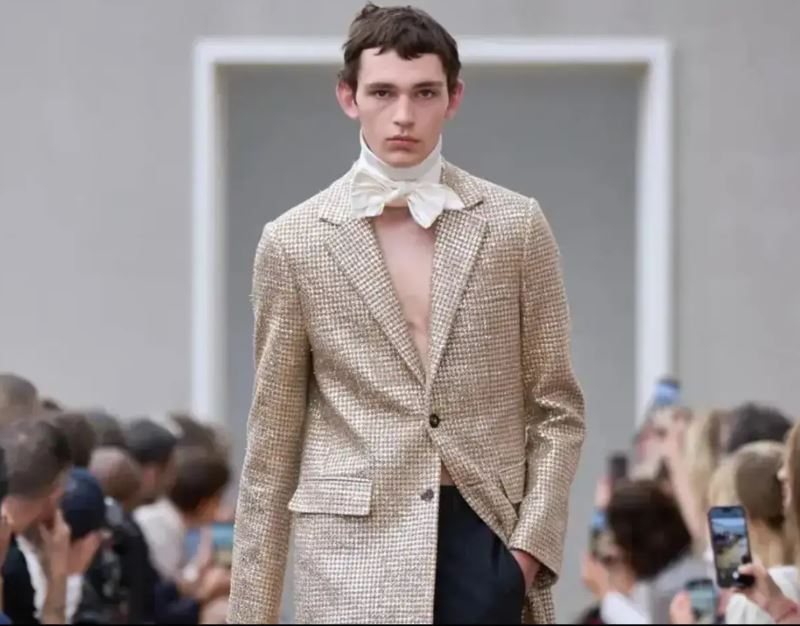
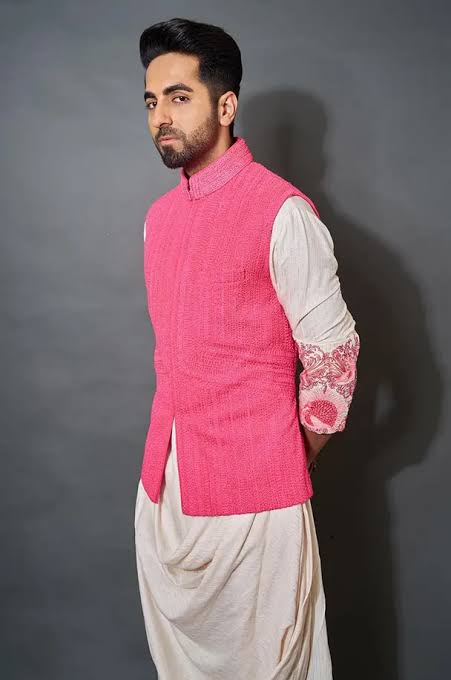
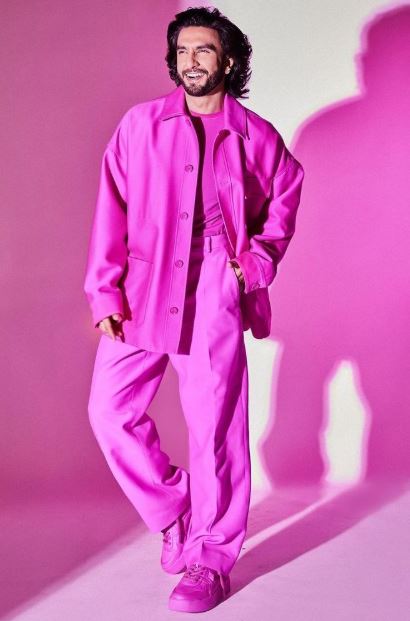
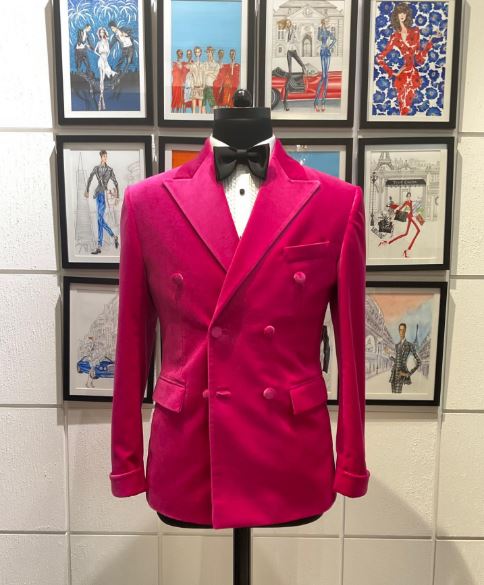
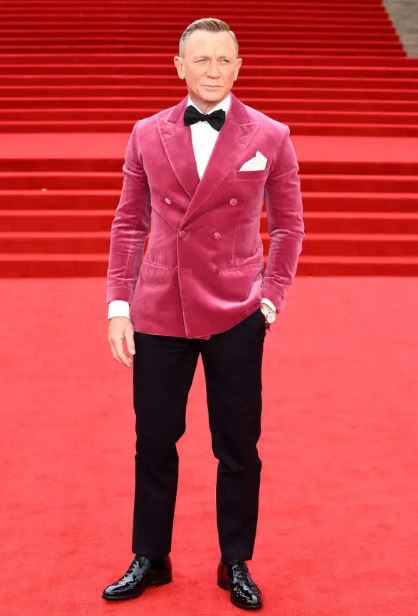
Contemporary fashion actively challenges pink’s strict feminine association. Designers like Troy Costa embrace all shades of pink,” subverting 20th-century gender norms. Fashion scholar Valerie Steele notes pink is “now having a ‘cool’ phase.” It’s “hip, it’s androgynous, it’s strong. And it’s here to stay,” signaling a new era of Pink for Men.
“Millennial Pink” gained prominence around 2014, quickly becoming a “gender-neutral mainstay.” In K-Dramas, pink is often used to highlight a character’s charm, softness, or romantic side. Whether it appears in clothing, set designs, or props, the color adds a subtle emotional layer. Especially in romantic storylines, pink helps express feelings like affection and playfulness without saying a word. Female empowerment brands like Boss Babe Inc. and the Girlboss book embraced this soft hue. Influential fashion labels like Acne Studios and Glossier also adopted it. Social media played a crucial role in its widespread adoption. The “Barbie pink” trend, spurred by the 2023 movie, further contributed to pink’s resurgence, prompting re-evaluation beyond traditional stereotypes.
This re-evaluation is reflected in the market. The global gender-neutral clothing market is experiencing “rapid and substantial growth,” projected to reach USD 3.2 billion by 2028, with projections showing an even larger USD 209.73 billion by 2031. This expansion is driven by evolving social norms and consumer demand for inclusivity. The rising visibility of the LGBTQ+ Movement also contributes. Younger generations (Gen Z and Millennials) prioritize “self-expression and individuality,” signifying a broader societal movement towards gender fluidity. Fashion industries increasingly respond to a desire for self-expression beyond traditional binaries. The rigid gender coding of the mid-20th century is actively challenged and renegotiated in the 21st century, opening new avenues for Pink for Men.
Conclusion: The Dynamic Nature of Color Symbolism
Pink’s journey from a masculine hue to a predominantly feminine one, and its ongoing re-evaluation, is a compelling case study. It highlights the dynamic nature of color symbolism. Initially, pink was a softer extension of red, inheriting associations of power, vigor, and wealth. Aristocratic men in the 18th century and Ivy League gentlemen in the early 20th century confidently wore Pink for Men.
Its shift to a feminine color was a deliberate post-World War II marketing strategy. These campaigns reinforced traditional gender roles, encouraging women back into the domestic sphere. They also drove consumer purchases by creating a need for gender-specific baby clothes, which prevented hand-me-downs. Cultural icons like Mamie Eisenhower, pervasive media, and gendered children’s products further solidified this gendering. These factors shaped children’s understanding of gender roles from a young age.
This history shows color meanings are fluid and culturally constructed; they are constantly shaped by social, economic, and political forces. Pink’s history exemplifies this dynamic process. The women’s liberation movement in the 1960s and 70s temporarily challenged this binary, leading to a period of unisex clothing. Yet, gendered associations persisted, reinforced by later technological advancements like ultrasound.
Today, pink continues its evolution. Social movements reclaim it as a symbol of resistance and empowerment. Modern fashion trends, like “Millennial Pink” and the growing gender-neutral clothing market, actively challenge its rigid feminine identity. Despite this progress, lingering effects remain, including the “Pink Tax” on goods marketed to women and societal “gender police” enforcing color norms. As society moves towards greater gender fluidity, pink’s symbolism expands, reflecting a broader cultural shift. This shift seeks to transcend traditional binaries and embrace diverse self-expression, including a renewed acceptance of Pink for Men.