

Luxury fashion label Prada is facing the heat—and not in a good way. At their Spring/Summer 2026 runway show, the iconic brand unveiled a collection featuring Kolhapuri chappals, the hand-stitched leather sandals that have deep historical roots in 12th-13th century Maharashtra, India. While the designs glided effortlessly down the catwalk, one crucial detail was noticeably absent: any acknowledgment of their Indian origin.
The backlash was swift. Fashion critics, cultural commentators, and netizens called out the Italian fashion house for what many saw as blatant cultural appropriation. Social media buzzed with anger over the lack of credit to the Indian artisans and communities who have preserved the Kolhapuri craft for centuries. “Western fashion industry ripping off Indian fashion,” one user wrote. Another fumed, “Can they steal our legacy and sell it for insane amounts?”
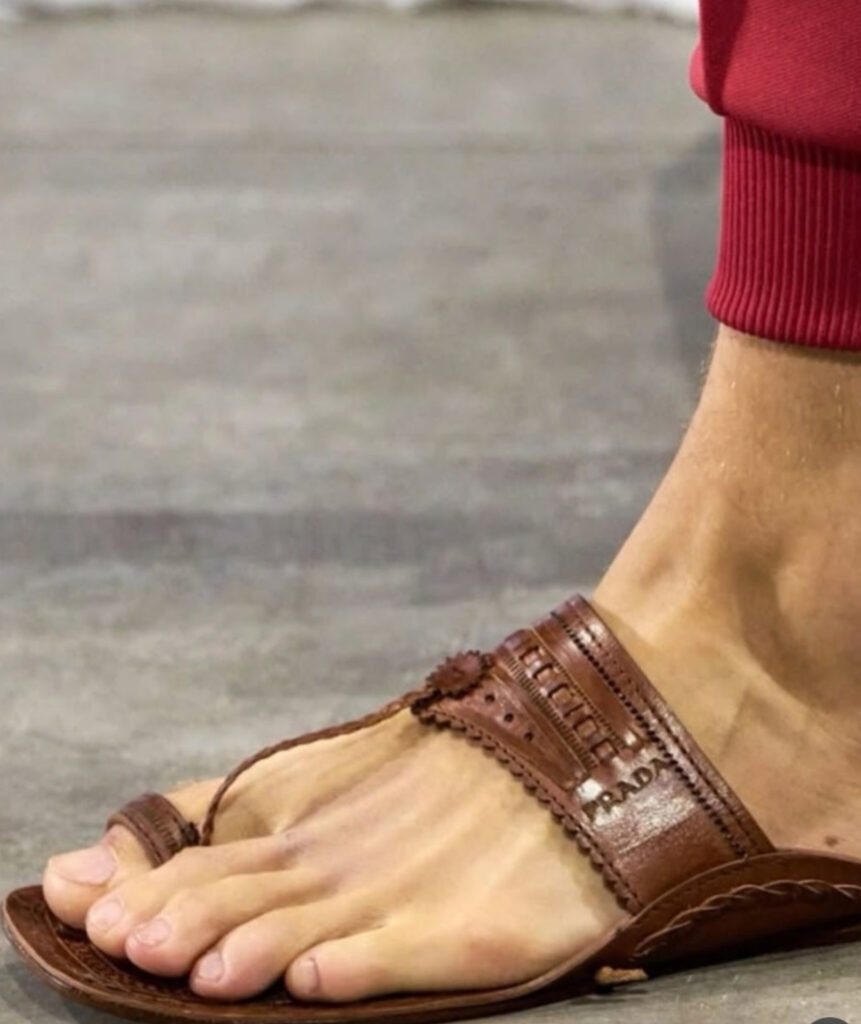
What makes this particularly controversial is that Kolhapuris aren’t just footwear—they’re heritage. Painstakingly handmade using techniques passed down through generations, they represent the craftsmanship and identity of rural Maharashtra. Today, thousands of artisans still rely on this craft for their livelihoods.
By featuring Kolhapuris without a nod to their cultural source, Prada risks turning a living tradition into a trendy commodity, stripped of its meaning and history. It’s a repeat offense in a global fashion industry that too often profits from the aesthetics of marginalized communities while ignoring their narratives.

In a time where cultural sensitivity, transparency, and ethical collaborations are becoming the backbone of sustainable fashion, this episode should serve as a wake-up call—not just for Prada, but for the industry at large. Credit matters. Collaboration matters. Respect matters.
As the Kolhapuris strutted the global runway, many asked: Can we wear the culture, without wearing down the community that created it?